You Won’t Believe What I Found Exploring Davos Beyond the Ski Slopes
When most people think of Davos, Switzerland, they picture snow-covered peaks and high-profile conferences. But beneath its polished surface lies a world of quiet traditions, Alpine charm, and hidden cultural gems waiting to be discovered. I went off the beaten path—wandering cobbled lanes, chatting with locals, and stepping into centuries-old customs—and found a side of Davos few travelers ever see. This is not just a winter escape; it’s a journey into the heart of Swiss heritage. Beyond the glossy resorts and international summits, there’s a rhythm of life shaped by mountain seasons, ancestral practices, and a deep respect for nature and community. In exploring Davos beyond its global image, I uncovered a place where modernity and tradition coexist in quiet harmony.
Arrival in Davos: First Impressions vs. Reality
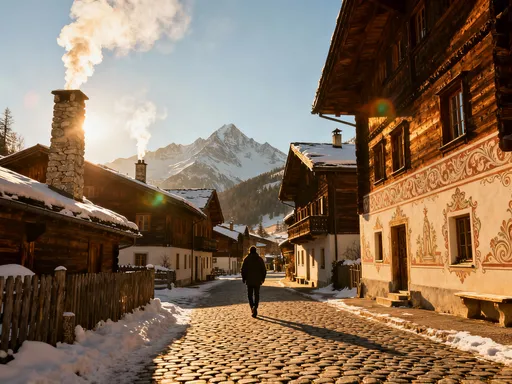
Descending into Davos by train, the first view is one of crisp Alpine perfection—neat rows of chalets nestled between evergreen forests, ski lifts tracing the hillsides, and clean air that carries the scent of pine and frost. The town appears almost too orderly, a postcard of Swiss efficiency and winter elegance. It’s easy to assume that Davos, as the host of the World Economic Forum, has been polished into a cosmopolitan enclave, detached from the rhythms of rural life. Yet, within minutes of stepping off the platform, the illusion of sterility fades. The streets of Davos Dorf, the original village center, are lined with hand-carved wooden balconies and sgraffito-decorated facades that whisper of centuries past. Locals greet each other by name in a blend of Swiss German and Rhaeto-Romanic, their voices warm and unhurried.
What becomes clear is that Davos is not merely a stage for global elites or winter sports. It is, first and foremost, a mountain community with deep roots. While the annual influx of business leaders brings international attention, the town’s identity remains anchored in its geography and heritage. Farmers still tend alpine pastures in summer, families gather for seasonal festivals, and elders preserve stories passed down through generations. The contrast between the sleek conference center and the centuries-old church in the village square is not a contradiction—it’s a testament to resilience. Davos has welcomed the world without losing itself, a rare balance that invites travelers to look beyond the surface and discover a quieter, more enduring truth.
The Living Culture of the Grisons Region
Davos lies in the canton of Graubünden, known in English as the Grisons, Switzerland’s largest and most culturally diverse region. Nestled in the eastern Alps, this area borders Italy, Austria, and Liechtenstein, creating a unique blend of linguistic and cultural influences. What sets Graubünden apart is the presence of Rhaeto-Romanic, a Romance language descended from Latin, still spoken by around 60,000 people today. In Davos, while German dominates, you’ll hear Rhaeto-Romanic phrases in local conversations, shop signs, and traditional songs. This linguistic heritage is not a museum piece—it’s a living thread connecting past and present.
The cultural identity of the region is also expressed through traditional dress, known as Tracht. Women wear long woolen skirts, embroidered bodices, and lace caps, while men don dark trousers, waistcoats, and felt hats. These garments are not reserved for tourist performances; they appear during festivals, religious holidays, and family celebrations. The preservation of these customs reflects a broader commitment to cultural continuity. In schools, children learn about local history and seasonal traditions. In homes, recipes, songs, and crafts are passed from one generation to the next. This is not performative heritage—it’s a way of life. For visitors, engaging with this culture means more than observing; it means listening, learning, and honoring the quiet pride that comes from belonging to a place shaped by centuries of mountain living.
Walking Through History: The Old Town and Local Architecture
To understand Davos, one must walk its oldest streets, particularly in Davos Dorf, the historic core that predates the modern ski resort by hundreds of years. Here, time moves differently. Narrow cobblestone lanes wind between wooden chalets with wide eaves and flower-filled balconies. Many of these homes date back to the 17th and 18th centuries, their facades adorned with sgraffito—a technique where layers of plaster are scratched away to create intricate geometric or floral patterns. Each design is unique, a personal signature of the family who built it. These homes were not built for beauty alone; they were engineered for survival. Thick wooden walls insulate against harsh winters, while steeply pitched roofs shed heavy snowfall.
At the heart of the village stands the Kirche St. Johann, a Protestant church with a simple stone exterior and a richly painted interior. Built in the 12th century and rebuilt after a fire in the 1800s, it has served as a spiritual and communal center for generations. Inside, wooden pews bear the carvings of long-ago parishioners, and the pulpit rises like a ship’s prow, symbolizing faith as a vessel through life’s storms. Just beyond the church, a small cemetery holds weathered headstones inscribed with names that still echo through the town. Walking through Davos Dorf is like reading an open-air history book. Every building, path, and public well tells a story of resilience, craftsmanship, and adaptation to the mountain environment. This is not a reconstructed village—it is a living one, where history is not preserved behind glass but lived in everyday moments.
Seasonal Traditions That Define Local Life
In the Alpine world, time is measured not by clocks but by seasons, and Davos remains deeply attuned to nature’s cycles. One of the most cherished traditions is the Almabtrieb, the autumn descent of cattle from high mountain pastures. In September and October, farmers lead their herds back down to the valley, the cows adorned with elaborate headdresses of flowers, feathers, and bells. The event is both practical and ceremonial—a celebration of a successful summer grazing season and a prayer for safe winter shelter. Locals gather to watch, children run alongside the animals, and brass bands play traditional tunes. The air fills with the sound of cowbells, a rhythm as old as the mountains themselves.
In early March, the arrival of spring is marked by Chalandamarz, a festival with roots in pre-Christian times. Boys and young men parade through the streets wearing cowbells and ringing handbells, their songs echoing off stone walls. The noise is meant to drive away winter spirits and awaken the earth. In Davos, this tradition is still practiced in schools and community groups, with families dressing in traditional woolen garments and gathering for shared meals afterward. Similarly, the Advent season is observed with quiet reverence. Villages light wooden candle arches in windows, symbolizing the coming of light. Caroling groups walk from house to house, and children carry lanterns in evening processions. These traditions are not tourist attractions; they are acts of cultural continuity, binding the community together through shared rhythm and ritual. For visitors, witnessing these moments offers a rare glimpse into a way of life that values patience, nature, and togetherness.
Taste of Tradition: Dining Like a Local
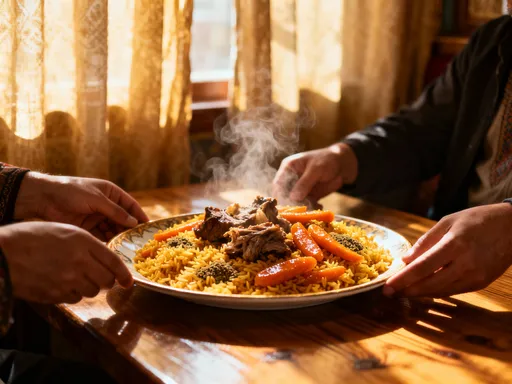
Food in Davos is more than sustenance—it is an expression of identity, shaped by altitude, climate, and centuries of resourcefulness. The cuisine of Graubünden is hearty and seasonal, designed to fuel life in a cold, mountainous environment. One of the region’s most beloved dishes is Capuns, a delicate parcel of chard leaves wrapped around a filling of spätzli (egg noodles), dried meat, and herbs, then simmered in milk. The dish varies from household to household, each family guarding its own version. Another staple is Pizokel, a dumpling made from buckwheat flour, often served with melted cheese, fried onions, and apple compote. These are not refined gourmet creations—they are humble, nourishing meals born of necessity and perfected over time.
Sweet endings often come in the form of Bündner Nusstorte, a rich caramelized walnut tart with a flaky crust. Made with locally sourced honey and walnuts, it is a favorite at weddings, holidays, and Sunday gatherings. To experience these dishes authentically, one must seek out family-run inns and small restaurants, often tucked away in village lanes. Places like family-owned Berghof or traditional Gasthäuser in Davos Dorf serve meals made from recipes passed down for generations. Dining here is a slow affair—meals unfold over hours, accompanied by conversation, local wine, and the clink of coffee cups. There is no rush, no pretense. This is the heart of Swiss hospitality: warmth, simplicity, and a deep appreciation for the moment. For travelers, sharing a meal in such a setting is not just about taste—it’s about connection.
Arts, Museums, and Storytelling in the Mountains
Culture in Davos is not confined to festivals and food; it is also expressed through art and memory. The Kirchner Museum, dedicated to the German expressionist Ernst Ludwig Kirchner, stands as a bridge between international modernism and Alpine inspiration. Kirchner lived in Davos from 1917 until his death in 1938, drawn by the clarity of light and the solitude of the mountains. His paintings—vivid landscapes, angular figures, and bold colors—capture both the beauty and emotional intensity of the region. The museum, designed by architect Peter Zumthor, blends seamlessly into the landscape, its concrete walls echoing the surrounding cliffs. It is not a remote art temple but a place of local engagement, hosting school programs, artist talks, and community events.
Beyond modern art, Davos preserves its folk heritage through small, locally run museums. The Davos Local History Museum, housed in a 17th-century granary, displays farming tools, traditional clothing, and photographs of early tourism. Exhibits tell the story of how the town transformed from a quiet farming village into a health resort in the 19th century, attracting tuberculosis patients seeking clean mountain air. Oral history projects record the memories of elders, capturing voices and stories that might otherwise fade. Storytelling walks, led by longtime residents, take visitors through forgotten paths and hidden chapels, sharing legends of avalanches, healers, and mountain spirits. These cultural spaces do not exist for spectacle—they are part of a living effort to remember, honor, and pass on what matters.
Traveler’s Guide: How to Experience Davos Authentically
To truly experience Davos, one must slow down. The best time to visit for cultural immersion is during the shoulder seasons—late spring (May to June) and early autumn (September to October). These periods avoid the peak ski crowds and the bustle of the World Economic Forum in January, allowing space to connect with local life. Summer offers hiking through alpine meadows and visits to high-altitude farms, while autumn brings the Almabtrieb and harvest festivals. Winter, though dominated by skiing, still holds moments of tradition—Advent markets, Christmas carols, and New Year’s customs like Silvesterkläuse, where masked figures walk in silent procession.
When exploring, prioritize walking. Davos Dorf, Platz, and the path along the Flüela River offer the most authentic atmosphere. Stay in family-run guesthouses rather than large hotels, and eat at small inns where the owner might greet you at the door. Learn a few phrases in Swiss German or Rhaeto-Romanic—simple greetings like “Grüezi” (hello) or “Merci” (thank you) go a long way. Engage with locals respectfully; ask about their traditions, but do not treat them as performances. Attend a church service, a village fair, or a seasonal market—not as a spectator, but as a guest.
Public transportation in Davos is efficient and eco-friendly. The Davos Klosters Card provides free access to buses, local trains, and some museum entries, making it easy to explore without a car. For deeper immersion, consider joining a guided cultural walk or a cooking class focused on regional dishes. The key is curiosity—being open to unplanned moments, a conversation with a farmer, a shared meal, or a quiet moment in an ancient chapel. Authentic travel is not about checking sights off a list; it’s about presence, patience, and respect.
Davos is more than a conference hub or ski resort—it’s a living cultural landscape shaped by mountains, history, and community. By stepping beyond the expected, travelers gain not just memories, but a deeper understanding of Alpine life. The real magic of Davos isn’t in its fame, but in its quiet, enduring soul. It’s in the chime of cowbells at dusk, the scent of woodsmoke in winter air, and the warmth of a shared table in a centuries-old inn. To visit Davos authentically is to listen—to the land, to the people, to the slow, steady heartbeat of a place that has learned to thrive in harmony with its environment. In a world that often values speed and spectacle, Davos offers something rare: the gift of stillness, and the wisdom of a life lived with intention.