You Gotta See These Hidden Gems in Sana'a – Mind-Blowing Culture & Chill Vibes
Wandering through Sana’a feels like stepping into a living storybook—centuries-old tower houses rise like sandcastles, and the air hums with the scent of incense and freshly baked malooga. I went searching for leisure spots where locals unwind, and what I found was beyond stunning. From quiet rooftop escapes to bustling but peaceful souqs, Sana’a offers soul-soothing moments in the most unexpected places. This is not a city built for tourism, yet it opens its arms to those who come with respect and curiosity. Here, leisure is not about entertainment or escape—it’s woven into the rhythm of daily life, expressed through shared tea, quiet contemplation, and the simple act of being together. What makes Sana’a extraordinary is how deeply culture and calm are intertwined.
The Soul of Old Sana’a: Where History Meets Leisure
Sana’a’s Old City, a UNESCO World Heritage Site, stands as one of the oldest continuously inhabited urban centers in the world. Its skyline, marked by towering mud-brick buildings with geometrically patterned facades, evokes a sense of timelessness. These multi-storied homes, some reaching up to eight floors, have been passed down through generations, each room telling a story of family, resilience, and tradition. While many visitors come to admire the architecture, the true essence of the Old City reveals itself in the way people live within it. Leisure here is not confined to parks or cafes but unfolds organically in shaded courtyards, narrow alleyways, and small public squares where children play and elders sit on low stools, watching the world pass by.
What sets Sana’ani leisure apart is its integration with heritage. The city’s design naturally fosters connection and rest. Courtyards, often at the heart of homes, are not just architectural features—they serve as private oases where families gather in the cooler hours. These inner spaces, adorned with carved wooden beams and vibrant textiles, offer refuge from the midday sun and a place for quiet conversation or afternoon tea. Even in the busiest parts of the city, there are moments of stillness: a woman pausing to adjust her embroidered shawl, a shopkeeper sipping tea behind his counter, or a group of neighbors exchanging news under an arched gateway. These are not staged scenes but the everyday rhythm of life.
Walking through the Old City, one begins to understand that leisure here is not something scheduled or sought after—it is simply part of being. The labyrinthine alleys, though disorienting at first, encourage slow movement and discovery. There are no loud advertisements or flashing signs; instead, the sounds are soft—the rustle of fabric, the clink of copperware, the distant call to prayer. This sensory calm allows visitors to slow down, to breathe, and to observe. For the traveler, especially one accustomed to fast-paced urban environments, Sana’a offers a rare invitation: to be present, to wander without urgency, and to find joy in the ordinary.
Rooftop Retreats: The City’s Best-Kept Secret for Sunset Chilling
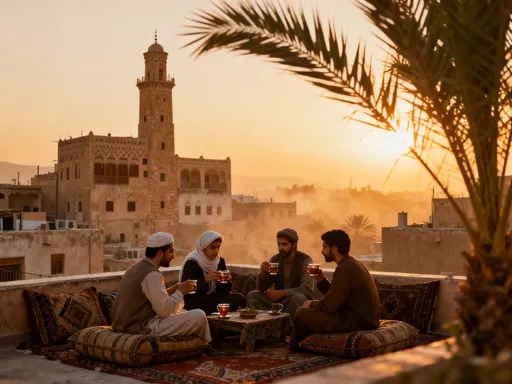
As the sun begins its descent behind the surrounding highlands, a quiet transformation takes place across Sana’a. Families move to their rooftops—flat, open spaces atop centuries-old homes—where the day’s final light paints the city in golden hues. These rooftop terraces, often lined with colorful cushions and low wooden tables, become intimate gathering spots where generations come together. It is here, above the bustle of the streets, that one of Sana’a’s most cherished leisure traditions unfolds.
The evening ritual typically begins with the preparation of tea. A brass samovar is placed over a small charcoal burner, and soon the air fills with the warm aroma of cardamom and mint. Children laugh as they chase each other across the terraces, while elders sip their tea slowly, watching the sky shift from amber to deep indigo. The view stretches across a sea of rooftops, punctuated by the occasional minaret, with the distant mountains forming a dramatic backdrop. There is no music, no television, no rush—just the quiet hum of companionship and the cooling breeze that rolls in from the highlands.
These rooftop moments are not commercialized experiences but deeply personal traditions. Unlike rooftop bars or lounges in other cities, these spaces are private, reserved for family and close friends. Yet, their spirit is one of openness. It is not uncommon for a neighbor to call out an invitation, or for a visitor to be welcomed with a cup of tea and a warm smile. This sense of shared peace, of communal stillness, is central to the Sana’ani way of life. For the observant traveler, being invited to a rooftop at sunset is not just a scenic treat—it is a gesture of trust and inclusion, a rare glimpse into the heart of local life.
Photographs cannot fully capture the feeling of these evenings—the way the light softens, the way voices lower, the way time seems to pause. But those who experience it carry the memory: a quiet moment of connection, high above the city, beneath a sky full of stars.
Al-Saleh Mosque & Surrounding Gardens: A Serene Escape
Rising with quiet majesty in the western part of the city, Al-Saleh Mosque is one of Sana’a’s most impressive modern landmarks. Completed in 2008, this grand mosque blends traditional Yemeni architectural elements with contemporary design, featuring two towering minarets and a vast central courtyard. While it serves as a place of worship for thousands, the surrounding gardens and open plazas have also become a sanctuary for relaxation and reflection. Unlike many religious sites that are strictly ceremonial, Al-Saleh Mosque and its grounds offer a rare combination of reverence and accessibility.
The gardens that encircle the mosque are thoughtfully designed, with shaded walkways, fountains, and clusters of trees that provide relief from the sun. Benches are placed at intervals, inviting visitors to sit and take in the serene atmosphere. Families often come in the late afternoon, spreading out on mats or sitting together under umbrellas. Some read, others chat quietly, and children play in the open spaces, their laughter blending with the sound of running water. The air carries the scent of jasmine and damp earth, especially after a rare rain. There is a palpable sense of peace here—a calm that is not imposed but naturally present.
What makes this space unique is its dual role as both a spiritual and social destination. Visitors do not come solely to pray; many come simply to be. The mosque’s grandeur inspires awe, but the surrounding gardens invite ease. This balance reflects a broader cultural truth in Sana’a: that sacred spaces can also be spaces of leisure. There is no contradiction between reverence and relaxation; instead, they coexist. For women, in particular, these gardens offer a rare opportunity to gather in a safe, open environment where they can talk, rest, and enjoy the outdoors without pressure or intrusion.
For travelers, a visit to Al-Saleh Mosque is not just about architecture or religion—it is about experiencing stillness in a city that moves at its own pace. Sitting in the garden as the call to prayer echoes across the plaza, one feels a deep sense of belonging, even as a guest. It is a reminder that true leisure is not about activity but about presence, and that some of the most peaceful moments come when we simply allow ourselves to be still.
Local Qat Gardens: Understanding a Controversial Tradition
No discussion of leisure in Sana’a would be complete without addressing the role of qat. This leafy green plant, chewed by a significant portion of the adult male population, is deeply embedded in Yemeni social life. While often misunderstood or criticized in international media, the qat session—known locally as a qat chew or qat gathering—is, for many, a vital form of relaxation and connection. Held in shaded gardens or private rooms in the afternoons, these gatherings are not about intoxication but about conversation, community, and decompression.
The typical qat garden is a simple, open-air space with mats or cushions arranged in a circle. Men arrive in the early afternoon, often bringing a bundle of fresh qat leaves wrapped in plastic to keep them moist. Over the next few hours, they chew slowly, sipping tea and engaging in long, meandering discussions. Topics range from politics and religion to family news and local gossip. The atmosphere is relaxed, even meditative. There is no rush, no agenda—just the rhythm of talk and silence, punctuated by laughter and the occasional serving of snacks.
For participants, these sessions are a crucial part of the week’s rhythm. After days of work or responsibility, the qat garden offers a space to unwind, to think aloud, and to strengthen social bonds. It is not uncommon for men to travel long distances to join a particular gathering, not for the qat itself but for the company. In a country where formal recreational spaces are limited, the qat garden serves as an informal social club—a place where men can be themselves, share burdens, and find support.
While the practice is not without controversy—concerns about water use, economic impact, and health effects are valid—it is important to approach it with cultural sensitivity. To dismiss the qat session as mere habit or waste of time is to overlook its deeper social function. For many Yemenis, it is one of the few consistent opportunities for meaningful conversation and emotional release. Understanding this tradition, even without participating, allows visitors to appreciate the complexity of Sana’ani leisure culture—one that values connection as much as comfort, and conversation as much as quiet.
Hidden Cafés and Tea Houses: Where Flavor Meets Chill
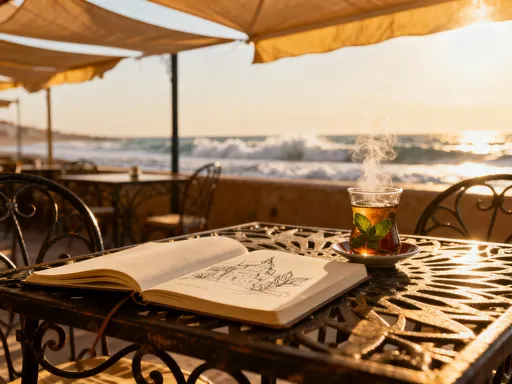
Scattered throughout Sana’a’s neighborhoods are small, unassuming tea houses and cafés that serve as quiet hubs of daily life. These are not international chains or Instagram-famous spots but family-run establishments tucked into alleyways, near mosques, or at the edges of markets. With their chipped porcelain cups, flickering lanterns, and the constant clatter of spoons, they exude a warmth that cannot be manufactured. Here, the ritual of tea is not rushed but honored—a moment to pause, to talk, or simply to watch the world go by.
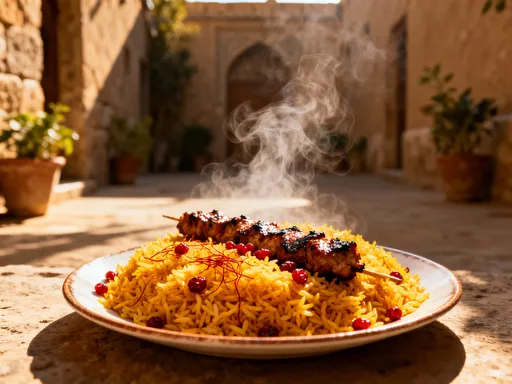
The most beloved drink is gahwa, a rich, cardamom-infused coffee often served with a spoonful of honey. It is poured from a brass dallah into small cups, and sipped slowly over conversation. Some tea houses specialize in herbal infusions—mint, sage, or a blend known as shai sahlab, which is creamy and lightly spiced. Sweets are often served alongside: pieces of basbousa, honey-drenched baklava, or fresh dates. The menu may be simple, but the experience is rich in flavor and feeling.
What makes these spaces special is their authenticity. There are no menus in English, no Wi-Fi signs, no attempts to cater to tourists. Yet, visitors who enter with respect are almost always welcomed. A shopkeeper might offer a spare seat, or an older man might gesture for you to join his table. These moments of connection are not performative—they are genuine expressions of Sana’ani hospitality. In a world where so many leisure experiences are commercialized, these tea houses remain refreshingly real.
For women, especially, these spaces can be places of quiet empowerment. In some neighborhoods, women gather in separate sections of tea houses, sharing news and supporting one another in a society where public spaces are often male-dominated. Even in mixed settings, the presence of women—sipping tea, reading, or simply sitting in silence—speaks to a slow but steady shift in social norms. To sit in one of these cafés is to witness the quiet resilience of everyday life, where joy is found not in grand gestures but in the warmth of a cup and the comfort of companionship.
The Grand Souq: More Than Shopping—It’s a Social Experience
The Grand Souq of Sana’a is not just a marketplace—it is a living, breathing social ecosystem. Stretching through the heart of the Old City, its covered alleys buzz with energy from dawn until dusk. Vendors call out their wares—spices in pyramids of crimson and gold, bolts of embroidered fabric, hand-carved wooden boxes, and baskets of fresh herbs. The air is thick with the scent of cumin, saffron, and grilled meat. But more than a place to buy and sell, the souq is where people come to connect, to see friends, and to experience the pulse of the city.
For locals, a visit to the souq is rarely about a specific errand. It is an outing, a form of leisure. Women walk together in groups, inspecting fabrics and haggling with good humor. Men stop at juice stalls for a glass of pomegranate or mango, then linger to talk with the vendor. Children dart between stalls, chasing each other or begging for a piece of candy. The rhythm is unhurried, the interactions layered with meaning. Even a simple transaction—buying a loaf of bread or a bunch of grapes—becomes an exchange of smiles, news, and goodwill.
What makes the Grand Souq unique is its ability to blend commerce with community. There are no cash registers or self-checkouts—every sale is personal. Vendors remember regular customers, ask after their families, and offer extra cloves of garlic “for good luck.” Bargaining is not a battle but a dance, a way of building rapport. And for visitors, wandering through the souq is one of the most immersive ways to experience Sana’ani culture. It is not a curated tourist attraction but a real, working market where life unfolds in all its complexity.
Yet, the souq also offers moments of quiet. In the early morning, before the crowds arrive, there is a stillness that allows you to appreciate the craftsmanship—the intricate metalwork, the hand-dyed silks, the calligraphy on old Qur’ans. And in the late afternoon, when the sun slants through the latticework above, the market takes on a golden glow, softening the noise into something almost musical. To walk through the Grand Souq is to understand that in Sana’a, leisure is not separate from daily life—it is woven into it, one conversation, one cup of tea, one purchase at a time.
Why Sana’a’s Leisure Is Different—And Why It Matters
In a world where leisure is increasingly packaged, monetized, and optimized for consumption, Sana’a offers a powerful alternative. Here, relaxation is not something you buy or schedule—it is something you live. It is found in the shared silence of a rooftop at dusk, the slow rhythm of a tea ceremony, the laughter in a crowded souq. There are no luxury spas, no guided meditation retreats, no curated experiences—yet the city exudes a deep, quiet joy that is all the more powerful for being unscripted.
What makes Sana’a’s approach to leisure so meaningful is its authenticity. People are not performing for tourists or chasing trends. They are simply being—talking, resting, praying, eating, and connecting in ways that have endured for generations. This is not a city that has preserved its culture behind glass; it is one that lives it, breathes it, and shares it with those who come with open hearts.
For the traveler, especially one seeking depth and connection, Sana’a is a rare gift. It asks for nothing but respect and presence. It does not dazzle with neon lights or five-star resorts, but it offers something far more valuable: the chance to slow down, to listen, and to remember that the simplest moments—sipping tea with a stranger, watching the sunset over ancient rooftops, walking through a market alive with color and sound—can be the most profound.
So yes, you’ve got to see these hidden gems in Sana’a. Not because they are famous or easy to reach, but because they remind us of what leisure can truly be: a celebration of culture, community, and the quiet beauty of everyday life. In a city that surprises at every turn, the greatest discovery is not a place, but a way of being—one that lingers long after the journey ends.