You Won’t Believe What Happens at Gondar’s Festivals
Gondar, Ethiopia, isn’t just a stop on the map—it’s a living storybook. I went not for the castles, but for the festivals, and got swept into something way deeper. Imagine drumbeats shaking your chest, priests in dazzling robes chanting at dawn, crowds in bright white clothing pouring through ancient streets. This is Timket or Meskel, depending on the season—spiritual explosions of color, sound, and faith. It’s not tourism. It’s participation. And honestly? I’ve never felt more welcome in a place. The air hums with devotion, the ground pulses with footsteps, and every face seems lit from within by something ancient and true. In Gondar, celebration isn’t performance. It’s prayer made visible.
Stepping Into Gondar: Where History Breathes
Gondar, nestled in the highlands of northern Ethiopia, stands as a testament to a royal past that still echoes through its streets and sacred spaces. Once the imperial capital of Ethiopia from the 17th to the mid-19th century, Gondar is often called the "Camelot of Africa" for its cluster of stone castles and palaces that rise like sentinels above the town. At the heart of this legacy is Fasil Ghebbi, a UNESCO World Heritage Site that served as the royal compound for generations of emperors. The compound includes six major buildings, including castles, a library, a banquet hall, and stables, all enclosed by a high wall. The architecture is striking—a fusion of Ethiopian, Nubian, Arab, and Baroque influences, shaped by both local craftsmanship and foreign contact during a time when Ethiopia maintained diplomatic ties with Europe and the Middle East.
Walking through Fasil Ghebbi, one feels the weight of centuries. The stone towers, with their turrets and battlements, seem more European than African, yet their foundations are rooted in Ethiopian soil and tradition. Each castle was built by a different emperor, beginning with Emperor Fasilides in the 1630s, who established Gondar as the capital after moving away from the mobile courts of earlier rulers. His descendants followed, each adding their own structure, creating a unique urban center where power, religion, and daily life intertwined. Even today, the city’s rhythm reflects that heritage. The Ethiopian Orthodox Church remains central to identity, with churches dotting the hills and valleys around Gondar, their circular designs and painted interiors preserving stories of faith and resilience.
What makes Gondar extraordinary is not just its past, but how that past lives on. Unlike many historical capitals that have become museums of nostalgia, Gondar breathes. Children play near the castle gates where emperors once held court. Monks chant in churches built centuries ago, their voices rising over the same stones trodden by ancestors. The city does not display history—it embodies it. This continuity is especially visible during religious festivals, when the spiritual life of the community erupts into public celebration. The reverence that permeates daily life intensifies, transforming the city into a stage for devotion. For visitors, this offers a rare opportunity: not to observe history from a distance, but to step inside it.
The Pulse of Celebration: Understanding Ethiopian Orthodox Festivals
To understand Gondar’s festivals, one must first understand the Ethiopian Orthodox Tewahedo Church, the spiritual heartbeat of the region. This ancient Christian tradition traces its roots back to the 4th century, making it one of the oldest organized Christian communities in the world. Unlike Western Christianity, the Ethiopian Orthodox Church follows its own calendar, liturgical language (Ge'ez), and theological interpretations. Its festivals are not mere calendar events—they are sacred reenactments, deeply woven into the fabric of life. Two of the most significant celebrations, Timket and Meskel, draw thousands of pilgrims and locals alike, transforming cities and villages into centers of collective worship.
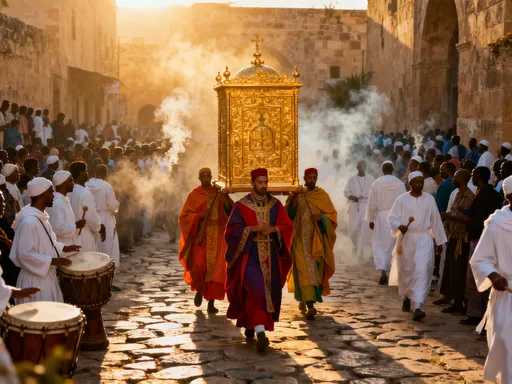
Timket, celebrated in January according to the Gregorian calendar, marks the Epiphany—the baptism of Jesus Christ in the Jordan River. It is a festival of water, purification, and divine revelation. For weeks before the event, communities prepare with prayer, fasting, and song. The faithful abstain from animal products, embracing a vegan diet as part of spiritual discipline. On the eve of Timket, priests carry tabots—replicas of the Ark of the Covenant—into churches, where they remain overnight in solemn vigil. The next morning, a grand procession moves through the streets, led by clergy in colorful embroidered robes, bearing the tabots under ornate umbrellas. The climax comes at a body of water, where a priest blesses the waters and sprinkles them on the crowd, symbolizing Christ’s baptism. This act is not symbolic alone—it is believed to carry spiritual power, washing away sin and renewing the soul.
Meskel, celebrated in September, commemorates the discovery of the True Cross by Empress Helena, mother of Emperor Constantine, in the 4th century. The festival’s name means "cross" in Ge'ez, and its central ritual is the lighting of the Demera, a large bonfire built from wood, brush, and flowers. The construction of the pyre begins days in advance, with community members contributing materials and labor. Priests bless the structure with prayers and incense before it is set alight at dusk. As flames leap into the night sky, the crowd sings and dances, circling the fire in joyful praise. The burning cross is seen as a sign of divine guidance and victory over darkness. Both Timket and Meskel are public expressions of faith, uniting generations in shared belief and practice. They are not performances for outsiders but living traditions, passed down through families and sustained by deep communal commitment.
Timket in Gondar: A City Transformed by Water and Song
When Timket arrives in Gondar, the city undergoes a transformation. The air fills with anticipation, markets buzz with activity, and temporary shelters spring up to house visitors who have traveled from distant villages. The festival unfolds over three days, each with its own rhythm and sacred purpose. The first day, known as Ketera, begins with early morning prayers and the ceremonial transfer of the tabots from their home churches to a designated site—often the Fentsa River or a nearby reservoir. This procession is a spectacle of devotion: priests walk barefoot, their heads covered, carrying the sacred objects on their shoulders while chanting ancient hymns. Behind them, thousands follow in white cotton garments, men in knee-length tunics called kemis, women in flowing dresses with embroidered shawls. The sight is breathtaking—a river of white flowing through the streets, accompanied by the steady beat of hand drums and the wail of sistrums, a traditional musical instrument.
By nightfall, the atmosphere shifts. The chosen site becomes a sea of tents and candles, with families gathering for prayer and fellowship. Incense drifts through the air, mingling with the scent of roasted barley and spiced tea. Children run between groups, their faces lit by firelight, while elders recite scripture and sing devotional songs. The night is long, but no one seems to mind. There is a sense of sacred waiting, a collective holding of breath before the main event. At dawn on Timket day, the procession resumes, more vibrant than before. The clergy, now in full regalia, lead the faithful to the water’s edge. The tabots are placed under canopies, and a senior priest offers prayers of blessing. Then, with great solemnity, he dips a cross into the water and sprinkles it over the crowd. In moments, the ritual becomes celebration—people laugh, shout, and rush into the water, splashing one another in joy. Some immerse themselves completely, seeking purification. Others cup the blessed water in their hands, carrying it home as a sacred gift.
The final day, known as Chirkos, marks the return of the tabots to their churches. The mood is more subdued, reflective. Yet even now, there is warmth in the air—the shared experience has created bonds between strangers. Locals invite visitors into their homes, offering injera (a sourdough flatbread) and wat (a spiced stew), often vegan to honor the fast. Music continues in the background, soft now, like a lullaby. For travelers, Timket is not just a festival to witness but a moment to participate in something profound. The city, usually quiet and historic, becomes a living temple, pulsing with faith and fellowship. It is a reminder that celebration, at its best, is not escape but connection—to the divine, to community, and to the timeless rhythms of tradition.
Meskel: Fire, Faith, and the Festival of Light
If Timket is a festival of water, Meskel is one of fire—and light. Celebrated on September 27th according to the Ethiopian calendar (which aligns with mid-September in the Gregorian system), Meskel draws its meaning from a miraculous event in Christian history: the discovery of the True Cross by Empress Helena. According to tradition, she dreamed of the cross’s location and confirmed it when a smoke signal rose from the spot where it was buried. In honor of this sign from heaven, Ethiopians light the Demera, a towering pyre that becomes the focal point of the festival. In Gondar, this event is not just religious—it is communal, artistic, and deeply emotional.
Preparations for Meskel begin days in advance. Families and neighborhood groups gather wood, brush, and aromatic plants to build the pyre. In some areas, the Demera can reach over 20 feet high, carefully stacked in a conical shape and decorated with daisies and other seasonal flowers. The construction is a collaborative effort, with elders guiding younger members, passing down knowledge and tradition. Once complete, priests visit the site to bless the structure with holy water and incense. The atmosphere is festive yet reverent. Children parade through the streets carrying small crosses made of twigs, while women sing traditional songs in high, melodic voices. The city feels alive with purpose, every detail infused with meaning.
As evening falls, the community gathers at a central open space—often a field or large square—where the Demera stands like a monument waiting to ignite. The crowd wears white, as they do during Timket, creating a sea of purity and unity. Priests in red and gold robes lead the service, chanting hymns in Ge'ez, their voices rising above the murmur of the crowd. Drummers beat a steady rhythm, and dancers move in circular patterns, their steps synchronized with the music. Then, at the appointed hour, a priest lights the pyre from multiple sides. Flames leap skyward, crackling and roaring, casting golden light across thousands of upturned faces. The moment is electric—a collective gasp, then cheers, then song. People dance, clap, and wave their hands in praise. The fire burns for hours, a beacon visible from the surrounding hills. For many, it is a moment of spiritual clarity, a tangible sign of God’s presence.
After the fire dies down, families return home, often sharing a meal of injera and lentil stew. The ashes of the Demera are sometimes collected and kept as blessings. Children fall asleep to stories of Empress Helena and the power of faith. In Gondar, Meskel is more than a holiday—it is a reaffirmation of identity, a celebration of resilience, and a testament to the enduring power of belief. For visitors, it offers a rare glimpse into a culture where faith is not private but public, not passive but active. The fire may fade, but the warmth remains.
Beyond the Spectacle: How to Engage Respectfully
For travelers drawn to Gondar’s festivals, the experience can be life-changing—but only if approached with humility and respect. These are not tourist shows staged for entertainment. They are sacred events, deeply personal and spiritually significant to the Ethiopian people. To participate appropriately, visitors must be mindful of cultural norms and religious sensitivities. Dress is one of the most visible ways to show respect. Wearing white clothing, as many locals do, is not required for foreigners but is highly appreciated. Modest attire—covering shoulders and knees—is essential. Avoid bright or flashy colors during religious processions, as they can be seen as distracting or disrespectful.
Photography is another area where caution is needed. While many locals welcome photos, especially after the main rituals, it is crucial to ask permission before photographing priests, tabots, or intimate moments of prayer. Never use a flash during ceremonies, as it can disrupt the solemn atmosphere. Some churches and ritual sites may prohibit photography altogether—always observe posted signs or follow the guidance of local guides. Speaking of guides, hiring a local is one of the best ways to deepen understanding and ensure respectful engagement. A knowledgeable guide can explain the meaning behind rituals, translate chants, and help navigate cultural nuances that might otherwise be missed.
Food customs also matter. During festival periods, many Orthodox Christians observe fasting rules, abstaining from meat, dairy, and eggs. Travelers should be prepared to eat vegan meals, especially when invited into homes. Accepting food with the right hand (never the left, which is considered unclean) and expressing gratitude are small gestures that go a long way. Most importantly, visitors should resist the urge to treat the festival as a photo opportunity. Instead, focus on presence—standing quietly, listening to the chants, feeling the rhythm of the drums, and allowing the moment to unfold. When invited to join a dance or share a meal, accept with gratitude. These are not performances. They are invitations into community.
Why Gondar’s Festivals Beat Any Tourist Show
In an age of curated travel experiences and cultural performances designed for foreign eyes, Gondar’s festivals stand apart. They are not rehearsed, staged, or shortened for convenience. They unfold over days, following ancient rhythms that honor spiritual truth over spectacle. There is no curtain call, no encore, no souvenir stand at the exit. What happens in Gondar during Timket or Meskel is real—raw, unfiltered, and deeply felt. This authenticity is what makes the experience so powerful. Travelers do not watch from bleachers. They stand in the dust, shoulder to shoulder with pilgrims, feeling the same incense in their eyes, the same chants in their bones.
Compare this to the cultural shows offered in many tourist destinations—dancers in colorful costumes, shortened versions of traditional ceremonies, performances timed to fit bus schedules. While these may be enjoyable, they lack the depth and emotional resonance of lived tradition. In Gondar, the music is not background noise. It is prayer. The dancing is not choreography. It is praise. The food is not theme-park fare. It is shared sustenance, offered with love. When a local family invites you into their circle, hands you a piece of injera, and smiles as you try to eat with your fingers, that connection is not part of the program. It is genuine.
This authenticity fosters a rare kind of connection—one that transcends language and culture. Singing with strangers, walking in processions, feeling the heat of the Demera on your face, or being splashed with blessed water during Timket—these moments stay with you. They change how you see the world. They remind you that travel is not just about seeing new places, but about opening your heart to new ways of being. Gondar’s festivals do not entertain. They transform. And for the open-minded traveler, that is the greatest gift of all.
Final Thoughts: Gondar as a Gateway to Meaningful Travel
Gondar’s festivals offer more than vibrant imagery or exotic experiences. They invite us to rethink what travel can be. In a world where destinations are often reduced to checklists and Instagram moments, Gondar calls for presence, patience, and respect. It asks us to slow down, to listen, to participate without dominating. To stand in a crowd of thousands, dressed in white, singing songs you don’t know, yet feeling completely at home—that is the magic of meaningful travel.
Places like Gondar remind us that culture is not a display case. It is a living, breathing reality shaped by history, faith, and community. To witness it is a privilege. To be welcomed into it is a gift. As more travelers seek authentic connections over superficial sights, destinations rooted in tradition—like Gondar—will continue to inspire. They challenge us to move beyond the role of observer and become humble guests in someone else’s story.
So if you go to Gondar, don’t just come for the castles. Stay for the festivals. Let the drumming shake your chest. Let the incense fill your lungs. Let the faith of the people touch your spirit. Travel like this doesn’t just show you a new place. It shows you a new way of seeing. And in the end, that is what makes the journey worthwhile.