You Won’t Believe This Hidden Festival Culture in Tuscany
Tuscany isn’t just rolling hills and vineyards—there’s a whole underground world of local festivals most tourists never see. I stumbled upon one by accident and was blown away by the passion, music, and centuries-old traditions. These aren’t staged for visitors; they’re real, raw, and deeply rooted in village life. If you’re looking for authenticity, this is where Tuscany truly comes alive. Far from the polished tour routes of Florence and Siena, tucked into stone villages reachable only by narrow winding roads, communities gather year after year to honor customs passed down through generations. These celebrations are not spectacles for cameras—they are acts of devotion, identity, and joy that pulse through the heart of rural Italy.
The Road Less Traveled: Discovering Tuscany Beyond the Postcard
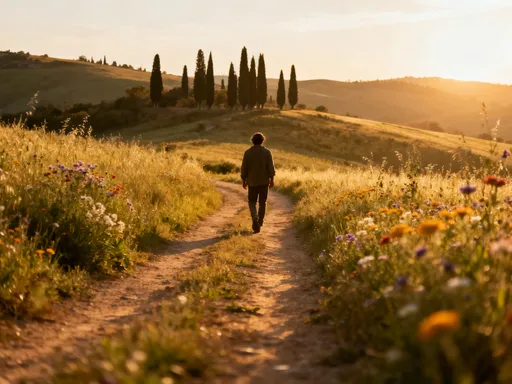
Tuscany is often imagined as a postcard of golden light over cypress-lined roads, vineyards climbing gentle slopes, and medieval towns perched high on hilltops. Cities like Florence, Pisa, and San Gimignano draw millions annually, and for good reason—they are masterpieces of art, architecture, and history. Yet this well-trodden path captures only one dimension of the region. Behind the fame of Chianti wine and Renaissance frescoes lies a quieter, more intimate Tuscany: one where village squares fill not with tour groups but with families lighting candles for saints, children racing through cobblestone alleys in handmade costumes, and elders singing hymns in dialects that have not changed in centuries.
Mainstream tourism, by design, gravitates toward the accessible and iconic. It prioritizes convenience, comfort, and curated experiences. While these have their place, they often overlook the living culture that continues to thrive in small communities far from the train stations and tour buses. These villages may lack five-star hotels or English-speaking guides, but they possess something far more valuable—authenticity. Their festivals are not reenactments; they are ongoing traditions, born from agricultural cycles, religious devotion, and communal pride. To witness them is not to observe history but to step inside it.
Visiting during off-peak seasons—particularly spring and autumn—offers the best opportunity to experience this hidden side of Tuscany. In May, hilltop towns celebrate the return of warmth with floral processions and harvest blessings. In September and October, the grape and olive harvests inspire feasts that blend labor and celebration. Without the summer crowds, the rhythm of daily life remains undisturbed, allowing travelers to integrate more naturally into the local scene. These quieter months also mean better availability at family-run agriturismi, deeper conversations with residents, and a chance to move at the pace of the countryside itself.
Festival Culture as a Living Tradition
In rural Tuscany, festivals are far more than calendar events—they are vital expressions of identity, faith, and continuity. These gatherings often originate in pre-Renaissance times, blending Catholic feast days with older pagan customs tied to the land. The sowing and harvesting of crops, the health of livestock, and the turning of seasons are all marked with rituals that unite the community in shared purpose. Unlike commercialized celebrations, these events are organized and sustained by locals, funded by village associations, and supported by generations who see their participation as both a duty and a joy.
Many festivals align with the agricultural calendar. In late spring, towns like Pienza and Montalcino host sagre—food festivals centered around local products such as pecorino cheese or wild boar ragù. These are not merely culinary events; they are acts of cultural preservation, where recipes are guarded like heirlooms and preparation methods remain unchanged for decades. Similarly, grape harvest festivals in September involve not only picking but also music, dancing, and religious services thanking saints for a bountiful yield. The connection between faith and farming remains strong, a testament to a way of life that values gratitude as much as labor.
Religious feast days are equally central. On June 13, the feast of Saint Anthony of Padua, villages in the Val di Chiana hold processions where statues of the saint are carried through fields, blessing the land. In smaller towns, these events draw nearly the entire population, with children dressed in white, elders carrying candles, and local priests leading prayers in Latin and Tuscan dialect. The emotional weight of these moments is palpable—not as performance, but as devotion. It is common to see grown men with tears in their eyes as the statue passes, a reminder that these traditions are not relics but living threads in the fabric of daily life.
What keeps these festivals alive is intergenerational participation. Grandparents teach grandchildren how to prepare traditional dishes, how to play folk instruments, and how to march in procession with dignity. Teenagers, often assumed to be indifferent to tradition, are frequently seen playing in folk bands or helping organize events. This continuity is not automatic—it is nurtured through pride, storytelling, and the simple act of showing up. In a world where digital culture dominates, these villages offer a rare model of resilience, where belonging is not declared online but lived in the piazza, season after season.
A Day in the Life of a Hidden Tuscan Festival
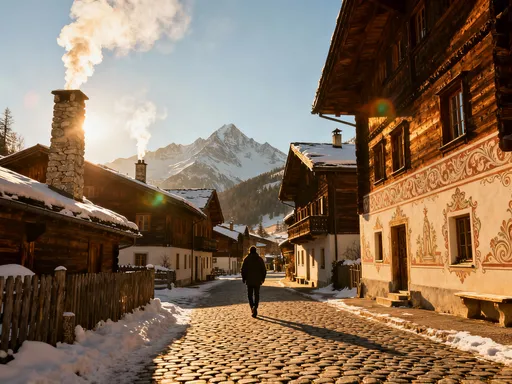
Imagine arriving in a quiet village at dawn, the air crisp with the scent of woodsmoke and damp stone. The streets are empty, but lights glow in kitchen windows as families prepare food for the day’s feast. By mid-morning, the piazza begins to fill. A brass band tunes up near the church steps. Children in embroidered tunics and lace-trimmed dresses line up for the procession. Elderly women in black shawls arrange trays of homemade bread and cured meats on long tables beneath a striped awning. This is not a tourist show—it is the heartbeat of a community preparing to honor its history.
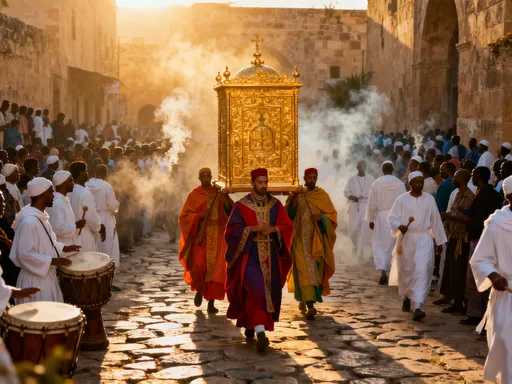
The festival officially begins with a religious service. The local priest delivers a homily in Italian, with nods to the town’s patron saint and the season’s blessings. After communion, the statue of the saint is carried from the church, lifted onto the shoulders of eight men dressed in red sashes and white gloves. The procession winds through narrow alleys, past shuttered shops and flower-filled balconies, accompanied by the slow, mournful notes of the zampogna, a traditional Italian bagpipe. Onlookers cross themselves; some kneel on the cobblestones as the statue passes. The mood is reverent, yet there is warmth—neighbors greet each other with cheek kisses, and children dart between the rows, giggling under their breath.
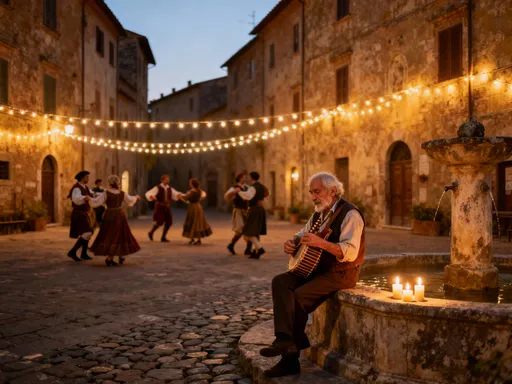
By early afternoon, the tone shifts from solemnity to celebration. Food stalls open, serving dishes that cannot be found in city restaurants: pici al cinghiale (hand-rolled pasta with wild boar sauce), frittelle di riso (sweet rice fritters), and schiacciata con l’uva (grape flatbread). Local wine flows freely, poured from ceramic jugs into mismatched glasses. Musicians switch from sacred hymns to lively folk tunes—tarantellas and saltarelli—played on tambourines, violins, and accordions. Couples dance in the square, some elderly and slow, others young and exuberant, their laughter echoing off the stone walls.
What stands out most is the warmth with which locals welcome respectful visitors. There is no stage, no ticket booth, no VIP area—just shared space and shared joy. An elderly woman might offer you a plate of warm cheese, saying only “Mangia, mangia” with a smile. A teenager might invite you to dance, laughing as you fumble the steps. There are no demands, no expectations—only the quiet understanding that you are a guest in their world. And if you show respect, speak a few words of Italian, and refrain from treating the moment as a photo opportunity, you may find yourself not just observing, but belonging, if only for a day.
How to Find These Secret Celebrations
Discovering these hidden festivals requires intention, patience, and a willingness to look beyond guidebooks. While major events like the Palio in Siena are well-documented, the smaller, more authentic celebrations are often announced only locally. One of the most reliable sources is the regional tourism board—specifically the Agenzia di Sviluppo Empolese Valdelsa or the Consorzio Turistico Val d’Orcia. These organizations maintain updated calendars of local events, many of which are not promoted internationally. Visiting their websites before your trip can reveal lesser-known sagre, patron saint festivals, and seasonal processions in villages with fewer than 2,000 residents.
Another valuable resource is the local church. In many Tuscan villages, the parish bulletin—posted on the church door or available inside—lists upcoming feast days and community events. These notices are often in Italian and handwritten, but even a basic understanding of key words like “festa,” “processione,” or “sagra” can help identify opportunities. Stopping by the church during a weekday visit and politely asking the custodian or a parishioner can yield personal recommendations and even invitations to private family gatherings.
Word-of-mouth remains one of the most effective tools. Staying at a family-run agriturismo increases your chances of learning about nearby events. Hosts often participate in local festivals and are proud to share their traditions. A simple question like “C’è una festa in paese questo mese?” (Is there a festival in town this month?) can open doors. Additionally, visiting the town hall (municipio) in the morning hours may allow you to pick up a printed event schedule or speak with a clerk who can point you to the next celebration.
The best times to plan such a trip are late spring (May to early June) and autumn (September to October). During these months, the weather is mild, the landscape is vibrant, and the agricultural calendar is rich with reasons to celebrate. Spring brings festivals for the Madonna delle Nevi in August and the Festa della Primavera in smaller towns, while autumn hosts the Vendemmia (grape harvest) and the Raccolta delle Olive (olive harvest), both of which inspire communal meals and music. These seasons also avoid the peak tourist rush, allowing for a more immersive experience.
Choosing the Right Destination: Villages That Keep Tradition Alive
While many Tuscan villages maintain their cultural heritage, some stand out for their commitment to authenticity and low tourism traffic. Montepulciano, though somewhat known, hosts the Bravio delle Botti in August—a unique barrel race where teams from each contrada (district) push 80-kilogram wine barrels uphill through the historic center. Unlike staged reenactments, this event is fiercely competitive and deeply rooted in civic pride. Residents spend months preparing, and the atmosphere is electric with loyalty and tradition.
Further off the beaten path, the Val d’Orcia region offers quieter yet equally rich experiences. Villages like Castiglione d’Orcia and Radicofani hold annual sagre that focus on hyper-local ingredients—truffles from nearby woods, honey from mountain hives, and pecorino aged in stone cellars. These events are small, often lasting only a weekend, and attended primarily by locals and regional visitors. The lack of commercialization means food is cooked in home kitchens, music is performed by village bands, and the sense of intimacy is immediate.
For those seeking a deeper immersion, the Garfagnana area in northern Tuscany hosts the Festa del Cerreto, a medieval festival in the village of Castelnuovo di Garfagnana. With its stone walls and mountain backdrop, the town transforms for one weekend each summer, with residents dressing in period costumes, jousting, and preparing historic recipes. Because the region is less accessible, it receives fewer tourists, preserving the event’s authenticity. Similarly, the village of Anghiari in the Arezzo province celebrates the Giostra del Saracino, a knight’s tournament that dates back to the 16th century. The event includes parades, traditional music, and a dramatic joust, all organized by local volunteers.
Reaching these destinations often requires a car, as public transportation is limited. Renting a vehicle allows flexibility and access to remote villages unreachable by bus. Accommodations range from agriturismi—working farms that host guests—to small family-run inns (pensioni) in the town center. Staying in these places not only supports the local economy but also increases opportunities for cultural exchange. Many hosts offer home-cooked dinners using ingredients from their own gardens, creating a dining experience that mirrors the festival meals themselves.
Etiquette and Engagement: How to Participate Respectfully
Participating in a local Tuscan festival is a privilege, not a right. These events are not performances for outsiders; they are meaningful traditions for the community. Therefore, respectful behavior is essential. The first rule is to observe before joining. Watch how locals dress, how they move through the space, and how they interact with the rituals. If a procession is underway, stand quietly to the side. Do not step into the path of the statue or try to touch it. Photography is generally tolerated, but always ask permission before photographing individuals, especially the elderly or children.
Learning a few basic Italian phrases goes a long way. Simple greetings like “Buongiorno” (good morning), “Grazie” (thank you), and “Permesso” (excuse me) demonstrate respect and openness. If someone offers you food or wine, accepting with a smile and a “Grazie, è molto gentile” (Thank you, that’s very kind) builds goodwill. Avoid treating the festival as a photo op or backdrop for selfies. Instead, focus on being present—listen to the music, savor the food, and let the atmosphere sink in.
There are also things not to do. Do not wear flashy or revealing clothing; modest attire is appreciated, especially during religious processions. Avoid loud or boisterous behavior, as these events often have solemn moments. Never mock traditions or ask intrusive questions like “Is this real?” or “Do you still believe in this?” Such remarks, even if meant playfully, can cause offense. Similarly, refrain from buying festival items as souvenirs unless they are clearly marked for sale—some costumes, candles, or religious objects are personal or sacred.
Respect also means supporting the community. Buy food and drinks from local vendors, not chain stores. Stay at locally owned accommodations. If a donation box is present, consider contributing, even a small amount. These actions show that you value their culture not as a spectacle but as a living, breathing way of life.
Why This Experience Changes How You See Travel
Attending a hidden Tuscan festival does more than fill a vacation album—it transforms the way you understand travel itself. Most tourism is transactional: you pay for a view, a meal, a guided tour. But in these villages, the exchange is different. You are not a customer; you are a guest. The value is not measured in euros but in human connection, shared emotion, and mutual respect. This shift—from consumption to participation—leads to a deeper, more lasting form of travel.
Such experiences foster a profound appreciation for Italy not as a museum but as a living culture. You begin to see traditions not as quaint relics but as vital acts of identity and resistance against homogenization. In an age of global sameness, these festivals are acts of preservation, where language, music, food, and faith are passed down with pride. To witness them is to understand that culture is not static—it is lived, renewed, and protected by ordinary people who care deeply about their roots.
Moreover, these moments encourage humility and curiosity. You realize that you do not need to be fluent in Italian or an expert in history to belong. A smile, a thank you, a willingness to learn—these small gestures open doors. And in return, you receive something rare: a sense of connection that transcends language, nationality, and time. You become, however briefly, part of a story much larger than yourself.
This kind of travel also supports sustainable tourism. By visiting lesser-known villages, you distribute economic benefits beyond the overcrowded cities. You help sustain local economies, preserve traditions, and reduce the environmental strain of mass tourism. In doing so, you contribute to a model of travel that is not extractive but reciprocal—one that gives back as much as it takes.
Ultimately, the hidden festivals of Tuscany remind us that the soul of a place is not in its monuments but in its people. They challenge us to slow down, to listen, to engage with openness and respect. They invite us not just to see Italy, but to feel it—in the beat of a drum, the taste of fresh bread, the warmth of a stranger’s hand on your shoulder as they welcome you to dance.
These hidden festivals aren’t just events—they’re windows into the soul of Tuscany. By stepping off the beaten path, travelers gain more than memories; they become temporary keepers of tradition. The real magic of Italy isn’t in the guidebooks—it’s where the locals still dance in the piazza long after the sun goes down.