This Is What Happens When You Slow Down in Agadir
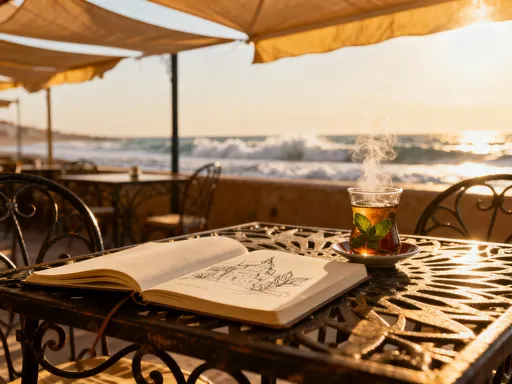
You know that rush of ticking off landmarks in one packed day? Yeah, I used to do that too—until I tried slow travel in Agadir, Morocco. Instead of sprinting through souks, I wandered. I sipped mint tea with local artists, watched waves crash while sketching in a seaside café, and discovered murals hiding in plain sight. Agadir isn’t just sun and sand—it’s soul. If you let it, this city reveals its art, rhythm, and warmth—one quiet moment at a time.
Rewriting the Agadir Story: Beyond Beach Resorts
Agadir is often reduced to its coastline—a stretch of golden sand backed by modern hotels and palm-lined promenades. For many, it’s a winter sun destination, a place to unwind under cloudless skies and dip into the Atlantic’s cool embrace. But beyond the postcard-perfect beaches lies a different rhythm, one that pulses quietly beneath the surface of everyday life. This is a city where tradition and modernity coexist, where the call to prayer drifts over surf schools, and where the scent of grilling sardines mingles with salt air long after sunset. To experience Agadir fully, one must move beyond the resort zone and embrace a slower, more intentional way of seeing.
The contrast between mass tourism and authentic local culture is stark, yet beautifully complementary. While the beachfront caters to international tastes, the neighborhoods just inland preserve the soul of southern Morocco. In the early morning, the fish market at the foot of the old kasbah comes alive with energy and sound. Fishermen unload their silver catch, vendors shout prices, and the rhythmic clatter of scales being scraped fills the air. This is not a performance for visitors—it’s real, raw, and essential. The colors are vivid: crimson octopus draped over ice, iridescent mackerel stacked in pyramids, and baskets of sea urchins glowing like jewels. The smells—briny, fishy, smoky—are not for the faint-hearted, but they are honest.
Just beyond the market, bakers pull warm loaves of khobz from clay ovens, their golden crusts crackling as they cool. The bread, slightly charred and fragrant with wood smoke, is wrapped in paper and carried home for breakfast. Shop signs, many hand-painted in Arabic and French, display fading calligraphy that speaks of decades of family trade. These details—often overlooked—form the texture of Agadir’s true identity. Slowing down allows travelers to notice them, to absorb not just sights but sensations: the warmth of sun on stone walls, the hum of conversation in Darija, the way light shifts across alleyways as the day unfolds. It transforms tourism from collection to connection.
The Art of Wandering: Finding Culture in Everyday Spaces
Slow travel begins with surrender—letting go of itineraries and allowing curiosity to lead. In Agadir, this means wandering without destination, turning down streets that appear unremarkable at first glance but unfold into moments of quiet revelation. The neighborhoods of Quartier des Arts and Tazmamart, nestled between hills and residential lanes, are perfect for such exploration. Here, life unfolds at a human pace. Children kick soccer balls in open courtyards, elders sip tea on low stools, and laundry flutters like prayer flags between buildings.
One morning, a random turn led to a small ceramic workshop tucked behind a grove of fig trees. An elderly artisan, his hands stained with cobalt blue, shaped clay on a foot-powered wheel. No sign advertised his studio; he worked simply because he had for fifty years. Nearby, in a doorway shaded by a woven reed curtain, a woman sat cross-legged, her fingers flying as she wove a Berber rug in deep reds and indigo. The patterns—geometric, symbolic, passed down through generations—told stories of protection, fertility, and migration. These were not crafts made for tourists but traditions kept alive in private, intimate spaces.
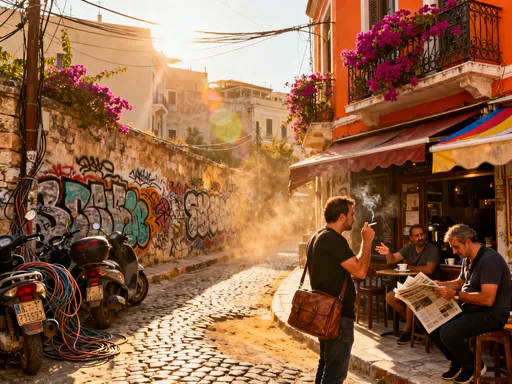
Further along, in a narrow alley painted with vibrant murals, a young man recited poetry in Tamazight, the Amazigh language, to a small group of neighbors. It was not staged, not monetized—just a moment of shared culture, spontaneous and genuine. Such encounters cannot be found in guidebooks or tour packages. They require time, openness, and a willingness to be present. The beauty of slow travel lies in these unplanned intersections, where the ordinary becomes extraordinary simply because you were still enough to notice it.
Meeting the Makers: Conversations with Local Artists
Agadir’s creative spirit thrives not in galleries but in homes, courtyards, and modest studios where artisans practice their crafts with quiet dedication. These are not performers for tourist consumption but custodians of cultural heritage. One such artist is Fatima, a third-generation potter whose family has worked with clay in the Sous Valley for over a century. Her studio, a single room with a dirt floor and shelves lined with unfinished pieces, is located in a quiet corner of Hay Hassani. There, she shapes vessels by hand, using techniques unchanged for generations.
During a visit, she explained how each pattern carries meaning. A zigzag line represents water, essential in this arid region. A series of dots symbolizes stars, guiding travelers through the night. Spirals echo the movement of sand in the wind. These are not decorative choices but visual language, a way of preserving memory and identity. When asked why she continues despite low income and little recognition, she smiled and said, “If we stop, who will remember?” Her words were simple, but their weight was profound.
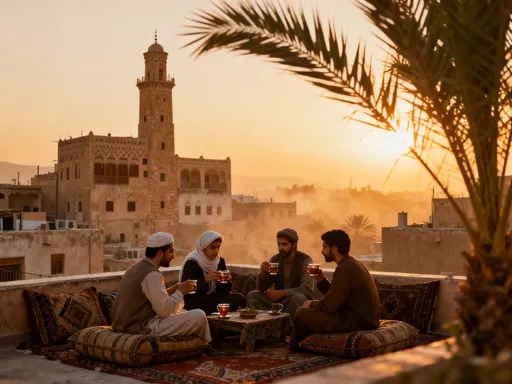
Another encounter was with Youssef, a calligrapher who blends Andalusian and Amazigh influences in his work. Using a reed pen and natural ink, he writes verses from classical poetry on handmade paper. His scripts flow like music, each stroke deliberate and graceful. He invites visitors to try, guiding hands with patience. There are no price lists, no pressure to buy. Instead, there is tea—sweet, steaming, served in delicate glasses—and conversation, often bridged by gestures and smiles when language fails. These interactions are not transactions but exchanges of respect and curiosity. They redefine what it means to experience art: not as spectators, but as participants in a living tradition.
Colors of the Souk: A Slow Dive into Craft and Commerce
The central souk of Agadir is more than a marketplace—it is a living museum of craftsmanship. Unlike the sanitized bazaars designed for tourist convenience, this souk operates on local time and rhythm. It opens early, peaks around midday, and winds down as families return home for afternoon prayers. To experience it fully, one must visit at a deliberate pace, resisting the urge to rush from stall to stall. The real treasures are not in the front displays but in the details: the way a leather dyer mixes henna and saffron to achieve a perfect ochre, or how a woodcarver uses chisels to etch precise geometric patterns into cedar.
One section of the market is dedicated to natural dyes. Vats of deep indigo, rust red, and forest green line the alleyways, their surfaces shimmering with oil-like rainbows. Artisans dip fabric slowly, explaining how certain plants yield specific hues—pomegranate rind for yellow, walnut shells for brown. These techniques, rooted in centuries of North African tradition, are now at risk of fading as synthetic dyes become cheaper and more accessible. Yet, those who continue this work do so out of pride, not profit.
Buying directly from these makers does more than support their livelihoods—it helps preserve cultural knowledge. When a traveler purchases a hand-dyed scarf or a carved tea tray, they become part of a chain that stretches back generations. But this responsibility comes with etiquette. Always ask before photographing artisans; many appreciate respect over exposure. Bargaining is customary, but it should be done with kindness, not aggression. A smile, a shared word, a moment of genuine interest can mean more than any transaction. The souk, when approached slowly, becomes not a place of commerce but of connection—a space where culture is not sold, but shared.
Rhythms of Life: Music, Food, and Shared Moments
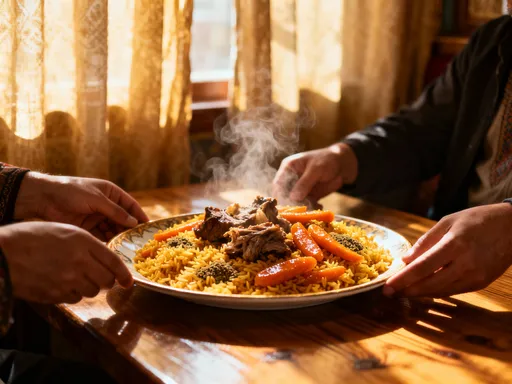
Culture is not confined to museums or performances—it lives in daily rituals, in the way people eat, gather, and express joy. In Agadir, these rhythms are woven into the fabric of ordinary life. On Friday mornings, the scent of couscous rises from kitchens across the city. Families gather for the weekly meal, steaming bowls topped with tender lamb, carrots, and raisins. The dish, slow-cooked for hours, is more than food—it is an act of care, a symbol of togetherness.
Music, too, flows through the city like a hidden current. From open windows, the strains of Andalusian melodies drift into the streets. In shaded plazas, older men gather around folding tables, playing traditional board games like chess or a variant called “tsoro,” their moves deliberate, their laughter easy. Near the marina, on weekend evenings, teenagers form impromptu drum circles, their hands moving over darbukas and bendirs in complex, interlocking rhythms. One evening, a woman joined them, not as a performer but as a learner. A young boy, no older than twelve, patiently taught her the basic beat—three strikes, pause, two strikes—his eyes bright with pride as she repeated it correctly.
Meals often become storytelling sessions. At a small family-run restaurant near the old medina, a shopkeeper who moonlighted as a cook served a fragrant chicken tagine with preserved lemons and olives. As she set the dish down, she pulled out a notebook and began sketching the menu design for a new dish—lamb with figs and almonds. “I like to draw what I cook,” she said with a smile. “It helps me remember the balance.” Over tea, she shared stories of her grandmother’s recipes, of cooking for weddings, of the importance of seasoning with patience. These moments—simple, unscripted—are the heart of slow travel. They remind us that food is not just sustenance but memory, and that every meal can be a conversation.
Designing Your Own Slow Path: Practical Tips for Deeper Travel
Slow travel is not about rejecting efficiency entirely but about choosing depth over speed. It requires small shifts in mindset and habit, adjustments that allow for greater presence and connection. One of the most effective ways to slow down in Agadir is to stay in locally run guesthouses rather than international hotels. Places like family-owned riads in the outskirts offer not just accommodation but hospitality—hosts who serve homemade breakfasts, offer walking suggestions, and sometimes invite guests to join evening meals.
Renting a bicycle is another way to move through the city with intention. Coastal paths, especially the route from Taghazout to Tamraght, offer stunning ocean views and access to quiet fishing villages. Cycling allows for frequent stops—to watch surfers catch waves, to buy fresh oranges from a roadside stand, to pause and sketch a scene that catches the eye. Unlike car tours, which rush from point to point, biking creates space for spontaneity.
Language, even in small doses, opens doors. Learning a few phrases in Darija—such as “salam alaikum” (peace be upon you), “shukran” (thank you), or “labas?” (how are you?)—shows respect and invites warmth. Locals often respond with delight when visitors attempt their language, even if imperfectly. It signals a willingness to engage, not just observe.
Equally important is the practice of returning—to the same café, the same market stall, the same stretch of beach. Sitting for an hour with a notebook, watching the world pass by, can yield more insight than a full day of sightseeing. Unplugging from digital maps and schedules creates room for discovery. Letting a conversation extend, allowing a walk to meander, choosing stillness over productivity—these are the quiet acts that transform travel from consumption to communion.
Why Agadir Changes You: The Lasting Impact of Slowness
Leaving Agadir after a week of slow travel feels different than departing from other destinations. There is no checklist of sights completed, no stack of souvenir photos, but instead a quiet fullness—a sense of having been seen as much as seeing. The city does not dazzle with grand monuments or famous landmarks. Its power lies in subtlety: the way an artist’s hands move over clay, the sound of a child laughing in a courtyard, the shared silence over a cup of tea.
Slowing down changes the traveler. It cultivates patience, deepens empathy, and rewires the way we pay attention. In a world that glorifies speed and productivity, Agadir offers a different lesson: that beauty often resides in stillness, that connection grows from presence, and that culture is not something to be consumed but lived. The sketches made in a seaside café, the words exchanged with a potter, the rhythm learned from a drum—these become internal souvenirs, carried long after the journey ends.
Ultimately, Agadir invites a redefinition of travel itself. It is not about how many places you visit, but how deeply you experience one. It is not about capturing moments for social media, but about being fully within them. When you slow down, you stop being a spectator and become part of the story—a guest welcomed not for what you spend, but for how you see. And in that shift, something quietly transformative occurs: you don’t just discover the soul of a city. You remember your own.